Walk into almost any furniture showroom today — or scroll through any interior design feed — and you are, whether you know it or not, looking at the long shadow of a single school that operated in Germany for just fourteen years. The Bauhaus was founded in Weimar in 1919, closed by political pressure in 1933, and in that compressed lifetime managed to dismantle roughly three centuries of decorative excess and replace it with a design language so logical, so structurally honest, that we still speak it fluently today. Understanding how it changed furniture specifically — the joinery, the materials, the proportions, the philosophy — is to understand why so much of what feels "modern" feels that way at all.
What the Bauhaus Was Actually Reacting Against
To appreciate the Bauhaus intervention, you need a sense of what came before it. Nineteenth-century European furniture was, in many respects, a performance of wealth and craft skill for its own sake. Heavily carved mahogany sideboards, cabriole legs on chairs that served no structural purpose, surfaces veneered, gilded, and upholstered within an inch of their load-bearing capacity. The object's job was to announce status. Function was almost incidental.
The Arts and Crafts movement had already pushed back against industrialisation's worst excesses, arguing for honest handcraft and natural materials. But its solution — retreat into medieval guild aesthetics — was backward-looking and expensive. It made beautiful objects available only to the wealthy, which contradicted its own democratic instincts. The Bauhaus looked at the same problem and asked a more radical question: what if the machine itself could be an ally?
The Foundational Principle: Form Follows Function
The phrase predates the Bauhaus — it is usually attributed to American architect Louis Sullivan in the 1890s — but the school transformed it from a slogan into a rigorous methodology. At the Bauhaus, "form follows function" was not a decorating tip. It was an epistemological position: the true form of an object could only be discovered by understanding precisely what it needed to do, who needed to use it, and how it would be made.
This had immediate, visible consequences for furniture. Ornament that served no structural or ergonomic purpose was stripped away. Not because minimalism was fashionable, but because every non-functional element was considered a kind of lie the object told about itself. A chair leg that tapered for purely decorative reasons was a chair leg pretending to be something it was not. Bauhaus furniture was furniture that told the truth.
Critically, this was also an ethical argument. If good design could be produced by machines and manufactured at scale, then well-made, well-proportioned furniture was no longer the exclusive province of the rich. The democratic implications were built into the methodology from the start.
Material Honesty: Letting Structure Show
One of the most durable Bauhaus contributions to furniture construction is the principle of material honesty — the idea that materials should be used in ways that reveal rather than conceal their nature. Steel should look like steel. Wood grain should be visible, not buried under opaque paint. Joints should either be structurally celebrated or at least not disguised with applied decoration.
This had profound practical consequences. Tubular steel, a thoroughly industrial material, was embraced rather than hidden. Marcel Breuer's famous cantilevered chair designs — developed while he was at the Bauhaus — used bent steel tubing to create a visual lightness that was inseparable from the material's actual properties. The steel's tensile strength was what allowed the seat to appear to float. The form was only possible because of the specific material. That alignment between material capability and visual expression is the essence of material honesty in practice.
Wood, when it appeared in Bauhaus furniture, was treated with similar directness. Rather than disguising grain with heavy stain or applying decorative veneer over inferior substrate, designers used timber in ways that acknowledged its grain, its directional strength, and its natural dimensions. The material was allowed to contribute its own logic to the object's final form.
The Grammar of Joinery
Joinery — the craft of connecting pieces of material to form a larger structure — is where design philosophy becomes most physically legible. Pre-Bauhaus furniture often used joinery that was structurally sound but decoratively concealed: dovetails hidden under applied moulding, mortise-and-tenon joints buried in upholstery. The joint was something to be ashamed of, a necessary mechanical reality that polite furniture pretended not to have.
The Bauhaus reversed this entirely. Joints became part of the visual language. The logic of how a chair came apart — how its forces were distributed, how tension and compression were managed — was something a viewer could read from the object itself. This was not mere aestheticism; it was intellectual transparency. A person sitting in the chair could, in principle, understand why it worked by looking at it.
This approach influenced what types of joints became favoured. Butt joints reinforced with visible hardware, through-tenons with exposed wedges, bolted connections where the bolt head was left visible rather than countersunk and filled — these were all ways of making structural logic readable. Contemporary furniture design still uses this vocabulary, particularly in pieces that want to communicate craftsmanship and structural confidence without resorting to decorative excess.
Flat-Pack and the Bauhaus Logic
It is worth noting that the Bauhaus instinct toward rationalized, machine-compatible joinery laid philosophical groundwork for what eventually became flat-pack furniture manufacturing. If joints are honest, if connections are logical and repeatable, if form follows function rather than decorative tradition, then it follows naturally that furniture might be designed to be assembled by its user from standardised components. The Bauhaus did not invent flat-pack, but its design grammar made it intellectually conceivable in a way that ornate Victorian cabinetry never could.
Proportion and the Human Body
Proportion in Bauhaus furniture was not derived from classical architectural ratios applied decoratively — it came from the human body. Seat heights, backrest angles, table heights, armrest positions: these were calibrated against how people actually sit, reach, and rest. This sounds obvious now, but it represented a genuine departure from a tradition in which furniture proportions were often determined by visual harmony within the object itself, without sufficient regard for the body occupying it.
The workshop exercises at the Bauhaus reinforced this empirically. Students were expected to study how objects were actually used, not just how they looked. This anthropocentric approach to proportion is a direct ancestor of ergonomics as a design discipline — the systematic study of how objects should be shaped to fit human bodies and human behaviour.
The lasting influence here is visible in how we now evaluate furniture quality. When someone sits in a chair and says it "fits" them, or notes that a desk is at exactly the right height, they are making a judgment that the Bauhaus made central to the design brief. Comfort as a design criterion — not comfort as padding and cushioning, but comfort as structural correctness — is a Bauhaus inheritance.
The Workshop Model: Theory and Hand Together
The Bauhaus pedagogy itself shaped how furniture designers were trained, and that training model has had lasting effects on design education globally. The school's workshops paired a Master of Form — typically a fine artist — with a Master of Craft — a skilled tradesperson. The idea was that neither pure artistic vision nor pure technical skill was sufficient. A furniture designer needed to understand materials at the bench level and think about form at the conceptual level simultaneously.
This integration resists the split that often develops in design education between "conceptual" designers who sketch beautiful objects they could not build and "technical" makers who execute competently but without governing ideas. The Bauhaus insisted the two modes of intelligence had to inhabit the same person. The best contemporary furniture designers — those whose work is both visually coherent and structurally rigorous — tend to embody exactly this combination.
Key Designers and What They Demonstrated
Marcel Breuer and Tubular Steel
Breuer joined the Bauhaus as a student and became one of its most influential furniture designers. His experiments with tubular steel — inspired, reportedly, by the curved steel of a bicycle handlebar — produced chairs whose visual lightness was a direct expression of structural possibility. The material's strength allowed frames to be reduced to a minimum, making the furniture feel like a drawing in space rather than a solid object. This remains one of the most copied visual strategies in furniture design.
Mies van der Rohe and the Expression of Structure
Mies van der Rohe, who directed the Bauhaus in its final years, carried the principle of expressed structure to its logical extreme. His furniture, like his architecture, treated the structural frame as the object's primary aesthetic event. The Barcelona Chair — designed for the German Pavilion at the 1929 International Exposition in Barcelona — used a cantilevered X-frame of flat steel bars that made the chair's structural solution visually explicit. Every element was load-bearing; nothing was decorative in the traditional sense.
Marianne Brandt and the Functional Object
While Brandt's most celebrated work was in metalwork rather than furniture, her influence on Bauhaus design thinking was substantial. Her insistence on designing objects around use rather than appearance — questioning, for instance, why a teapot was the shape it was when a different form might pour more efficiently — embodied the analytical rigour that the best Bauhaus furniture design applied to every brief.
How Bauhaus Principles Live in Contemporary Interiors
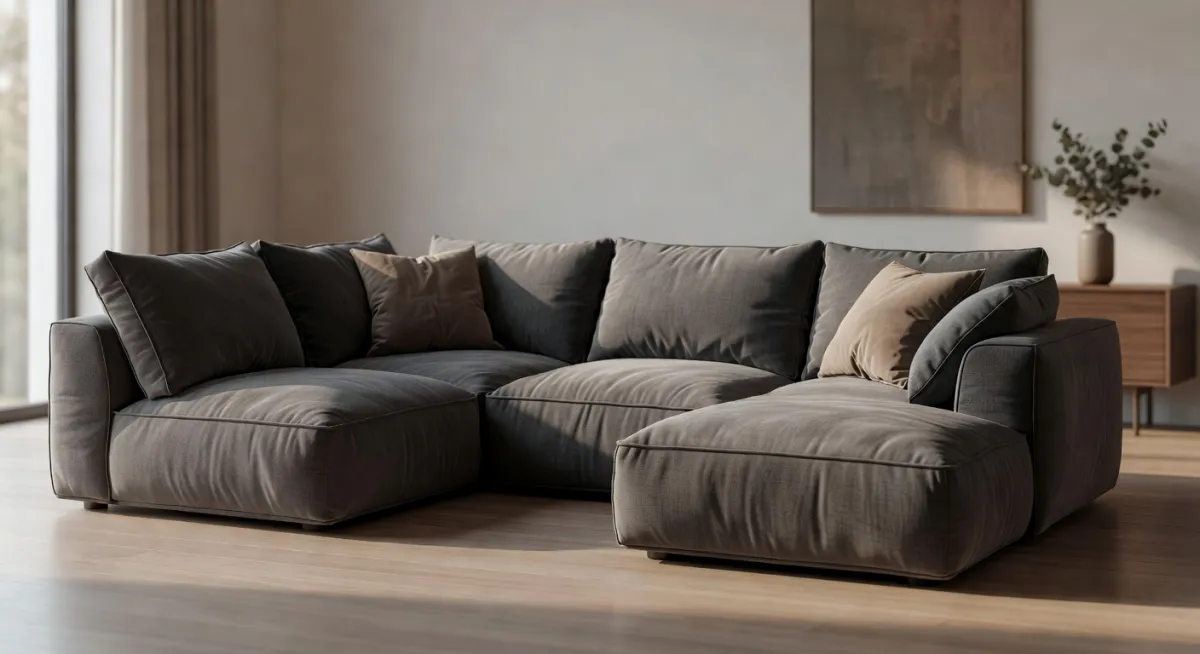
The Bauhaus grammar is so thoroughly absorbed into contemporary furniture design that it is often invisible as a historical presence. When a designer specifies a dining table with a visible steel trestle base rather than turned wooden legs, they are making a Bauhaus-inflected choice: the structure is the aesthetic. When upholstery is specified tight and tailored rather than tufted and draped, the choice reflects a preference for honesty over decoration that the Bauhaus made central. When a sofa sits on a plinth or a recessed base that makes it appear to float, the visual strategy comes from the same repertoire.
Material combinations that would have been considered vulgar in Victorian furniture — steel and leather, plywood and chrome, concrete and timber — are normal in contemporary interiors partly because the Bauhaus legitimised the industrial material palette and proved that beauty did not require traditional craft hierarchies.
Proportion, too, carries Bauhaus logic forward. The low-slung seating of mid-century modern furniture — itself deeply Bauhaus-influenced — persists in contemporary design because it aligns with a more casual, less formal domestic culture. The height of a piece of furniture is a social statement as well as an ergonomic one, and the Bauhaus understood this.
What Bauhaus Principles Do Not Mean
A word of caution against the reductive reading. "Form follows function" has sometimes been used to justify furniture that is cold, uncomfortable, or visually sterile — furniture that mistakes austerity for intelligence. This misreads the Bauhaus. The school's designers were passionately interested in visual pleasure; they simply believed that pleasure should arise from structural logic rather than applied decoration.
Material honesty does not mean that only raw, unfinished materials are acceptable. It means that finishing should serve the material rather than disguise it. A beautifully oiled oak surface is honest; a solid pine chair painted to look like marble is not. The distinction is between enhancement and deception.
And proportion calibrated to the human body does not mean that all furniture must be ergonomically clinical. It means the human body is the starting point. From that starting point, generosity, warmth, and even a degree of dramatic exaggeration are entirely permissible — as long as the object still serves the person occupying it.
Reading a Piece of Furniture Through the Bauhaus Lens
One of the most practical legacies of Bauhaus design thinking is that it gives anyone — not just trained designers — a framework for evaluating furniture. You can ask a small set of questions and quickly understand whether a piece is coherent or confused.
First: does the structure make sense? Can you trace how forces travel through the object — how weight moves from seat to leg to floor? If yes, the piece has structural logic. If the visual form makes it impossible to understand how the thing stands up, it is probably relying on hidden engineering to compensate for a dishonest exterior.
Second: are the materials being used according to their nature? A cantilevered steel shelf is using steel's tensile strength correctly. A steel shelf that is decoratively painted to look like wood is not being honest about what it is.
Third: does the proportion serve the person using it, or does it serve the room's visual composition at the user's expense? A beautiful tall-backed chair that forces every sitter into an uncomfortable posture has prioritised visual drama over function. The Bauhaus would call that a failure, however striking the object looks in a photograph.
These are not arcane professional judgments. They are questions any curious person can apply, and they come directly from the fourteen-year experiment in Weimar, Dessau, and Berlin that insisted furniture could be thought about, not just felt.
The Permanent Contribution
The Bauhaus did not produce a style in the way that Art Deco or Victorian furniture produced styles — defined by surface motifs, material fashions, and period-specific ornament. It produced a grammar: a set of structural, material, and proportional principles that remain generative rather than merely historical. You can apply Bauhaus logic to a piece of furniture made from reclaimed timber and hand-forged iron just as readily as to one made from powder-coated steel and injection-moulded polymer.
That is precisely why it persists. Styles exhaust themselves; grammars do not. The Bauhaus rewired how furniture is reasoned about — how designers approach a brief, how makers think about joinery, how anyone furnishing a space can distinguish between an object that earns its visual presence and one that merely borrows it from decorative convention. That rewiring is still running, nearly a century later, in almost every room that aspires to be well-made and honestly thought through.